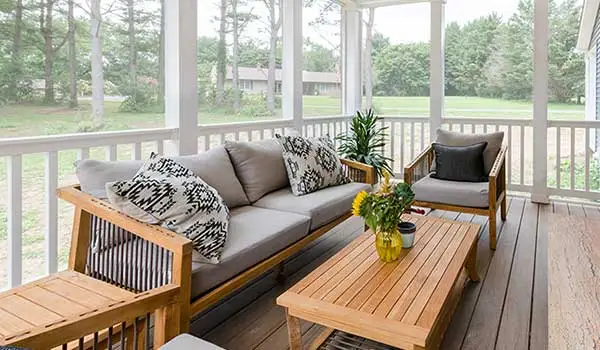
Screened-in Porch or 3-Season Room? Weighing the Pros and Cons
At first glance, a screened-in porch and 3-season room look similar, with a roof overhead and some sort of protection around the sides. Some homeowners even choose to run electricity to both types of enclosures to power lights and fans. But there are meaningful differences between the two types of rooms, including the functionality, and of course, the project cost to build them. Learn the pros and cons of these two projects, so you can choose the one that best fits your needs.

Screened-in Porch
A screened-in porch is a patio or deck with a roof and screen surround that keeps out bugs, sometimes with a fan and lights installed.
PROS
CONS
– Protection from the sun, insects, pests, and light rain
– Lower material and building cost than an addition
– No heating or air conditioning costs
– In Maryland, it’s only comfortable for about six months out of the year
– Does not protect from heavy rains, pollen, and dust
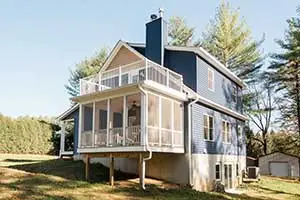 A screened-in porch is a great way to feel like you’re out in nature without having to experience the irritating parts like direct sunlight and pesky bugs. You can even add some light rain protection and privacy from neighbors with roll-up blinds that give you more shade and help keep water out and off of the furniture.
In many cases, with a patio, it is relatively easy to add posts, screens, and a roof to create your ideal space. However, if you want to make a screened-in room over a deck, your contractor will still probably need to rebuild the deck to accommodate the extra weight while staying up to local building codes.
3-Season Room
A 3-season room is an addition with a roof, energy-efficient windows, and HVAC hook up that is a comfortable space for most of the year.
PROS
CONS
– Protection from most weather conditions
– In Maryland, it’s comfortable for up to 10 months out of the year
– Versatile space for dining and entertaining
– More expensive to construct than an open deck or screened-in porch
– More costly to maintain in extreme heat and cold
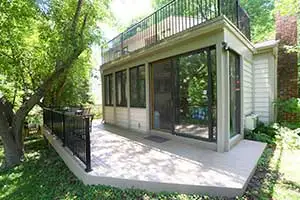 With energy-efficient windows and proper HVAC hookups, your 3-season room can remain a comfortable space throughout much of the year. It is a versatile spot to entertain, dine, and even put electronics like a TV to watch the big game. And since it is protected on all sides by windows, you don’t have to worry about rainstorms.
However, a 3-season room is not insulated like the rest of the rooms in your home, so you shouldn’t expect to be able to keep it at the same temperature. Additionally, it is not usually possible to turn an existing patio or deck into a three-season room. It is more likely that you will need to build an addition up to local code to support the weight of the windows, roof, electricity, and HVAC system. Because of this, a 3-season room is going to be more expensive than a screened-in porch both to build and maintain.
So, a screened-in porch is perfect if you want a space to spend time in the shade during the warmer months without being annoyed by insects, pests, and summer showers. In comparison, a three-season room is a more reliable place for entertaining and dining during the temperate months. Whichever addition you choose, make sure you find an experienced and licensed contractor you trust, like Brothers, to follow local building codes.